Host Operations
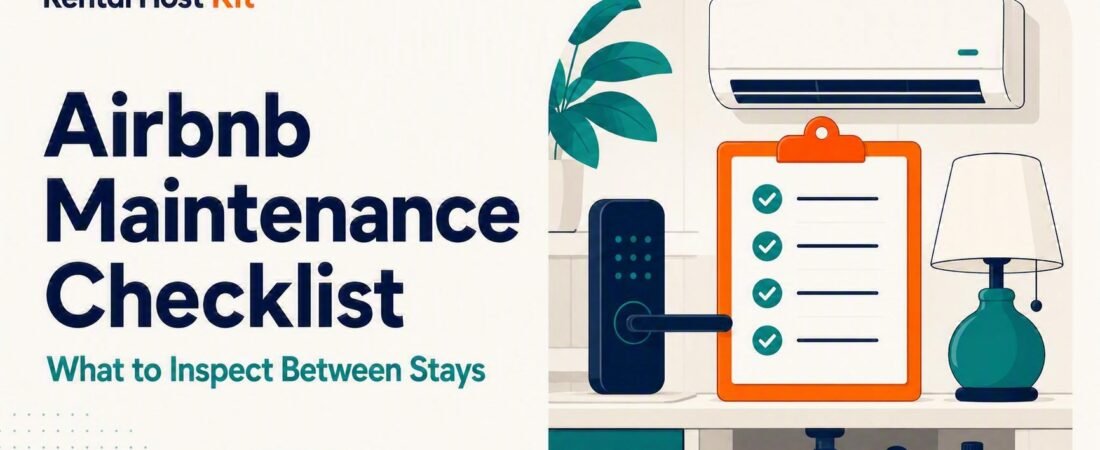
Airbnb Maintenance Checklist for Hosts: What to Inspect Between Guest Stays
A clean room and a working room are not the same thing. Here is exactly what to inspect at every turnover, in what order, so the next guest never finds the problem before you do.
An Airbnb maintenance checklist is the set of physical checks you run between guest stays to catch wear, leaks, low batteries, and safety issues before the next guest arrives. Cleaning makes the space look right. Maintenance makes sure it actually works — and stays safe. At minimum, inspect locks and batteries, water and drainage, climate control, electrics and lighting, Wi-Fi, and safety devices every single turnover, then run deeper checks monthly and quarterly. The same short-term rental maintenance routine works for any vacation rental, on whatever platform you host.
Why between-stay maintenance is the operational pillar most new hosts skip
When most new hosts hand over a turnover, they think about one thing: is it clean? Clean is visible. A wobbly bed frame, a slow shower drain, a smart lock running on a dying battery, an AC filter clogged enough to halve the cooling — none of that shows up in a photo of a made bed. It shows up at 11pm when a tired guest messages you that the air conditioning is barely working.
Here is the line I keep in my head: cleaning is what the guest sees; maintenance is what the guest discovers. Good maintenance will never guarantee a five-star review, but a broken AC or a leaking faucet is one of the fastest ways to lose one — and the guest is right there in your space when it fails. A quiet, ten-minute inspection between stays is the cheapest insurance you have against bad reviews, refund requests, and a small problem quietly turning into an expensive one.
Cleaning vs maintenance: what is the difference?
This trips up almost every beginner, so let’s separate them clearly.
Cleaning
Restores the space to a fresh, hygienic state for the next guest: surfaces, linens, floors, bathroom, kitchen, trash, restock.
Question it answers: Is it spotless?
Maintenance
Confirms everything functions and is safe: locks, water, appliances, climate control, electrics, Wi-Fi, and safety devices.
Question it answers: Does it all work?
They overlap during the turnover, which is exactly why hosts conflate them. The fix is simple: build maintenance in as its own deliberate pass, not something you hope your cleaner notices in passing. If you already use my Airbnb cleaning checklist, treat this maintenance checklist as its companion — run cleaning first, then walk the maintenance list before you mark the place guest-ready.
The every-turnover maintenance checklist (run this between every stay)
Work through it by zone, in roughly the order a guest moves through your space. None of this takes long once it’s a habit — most of a one-bedroom is covered in under fifteen minutes. Hosts sometimes call this their turnover checklist, and it applies to any short-term or vacation rental, not just Airbnb.
| Zone or task | What to inspect | How often |
|---|---|---|
| Entry, locks & security | Smart-lock battery, keys and codes, door latch, window locks | Every stay |
| Bathroom | Taps, hot water, under-sink leaks, drains, caulk, exhaust fan, mould | Every stay |
| Kitchen | Under-sink leaks, fridge and freezer, burners, small appliances, range hood | Every stay |
| Bedroom & living | Bed frame, drawers, remote batteries, seating, curtains and blinds | Every stay |
| Climate control | AC cooling and filter, heating, fans, thermostat | Every stay |
| Electrics & lighting | Bulbs, switches, outlets and USB, scorched sockets, cords | Every stay |
| Wi-Fi & tech | Router and internet speed, smart TV, smart devices, posted password | Every stay |
| Safety devices | Smoke alarm, CO detector, fire extinguisher, first-aid kit, exit info | Every stay |
| Wear & consumables | Worn linens and items, restock essentials | Every stay |
| Deeper tasks | Descale, deep filter clean, mould check, tighten hardware, pest check | Monthly |
| Seasonal | Pro AC service, water heater, mattress rotation, detector batteries, exterior safety | Quarterly |
The detailed checks for each zone are below.
1 Entry, locks & security
- Smart lock or keypad responds, and the battery indicator is healthy. Low batteries are the classic worst-timing failure — they lock guests out on arrival.
- Physical keys, lockbox, or backup code all work. If you rotate the code between guests, set the new one now.
- Door closes, latches, and the deadbolt aligns without forcing.
- Window and balcony locks function and aren’t painted or rusted shut.
2 Bathroom (your highest-risk zone)
- Run every tap hot and cold. Confirm hot water actually reaches temperature and pressure is normal.
- Look under the sink for damp patches or a slow drip at the trap. This is the single most common thing I find — and the cheapest to fix early.
- Toilet flushes fully and refills without running. The base shouldn’t rock.
- Shower and sink drain in seconds, not minutes. A slow drain is a hair clog building toward a blockage during someone’s stay.
- Caulk and silicone around the tub, shower, and sink are intact. Gaps let water sit behind walls and cause damage you won’t see until it’s costly.
- Exhaust fan runs (your main defence against mould).
- No visible mould on grout, ceiling, or silicone.
3 Kitchen
- Check under the kitchen sink for leaks — same trap issue as the bathroom.
- Fridge is cold, freezer is frozen, no odour, and the door seal isn’t torn.
- Every burner ignites or heats. If you smell gas, stop everything, ventilate, and call a professional — do not troubleshoot it yourself.
- Microwave, kettle, rice cooker, and coffee maker all power on.
- Range hood / exhaust works.
- Bin lid and pedal work, with no lingering smell.
4 Bedroom & living area
- Bed frame is solid — no wobble, no squeak, slats seated properly. A creaking bed is a surprisingly common complaint.
- Drawers, wardrobe doors, and sofa beds open and close smoothly.
- Remote controls (TV, AC, fan) have working batteries. Keep spares in the unit.
- Chairs and stools are stable, with nothing loose.
- Curtains or blinds slide freely and block light properly for sleep.
5 Climate control
- Air conditioning cools properly and the filter is clean. A clogged filter quietly halves your cooling — for split units, rinse or wipe the filter every few turnovers, not once a year.
- Heating or heat pump works, if your climate needs it.
- Ceiling and standing fans run on all speeds without wobbling.
- Thermostat reads accurately and responds.
6 Electrics, lighting & outlets
- Every bulb works. Keep a few spares in the property so a dead bulb never reaches a guest.
- All switches function.
- Power outlets and USB ports are live — test a couple with a phone charger.
- No scorched or discoloured sockets, and no plug that feels warm. Either is an electrical hazard; stop using it and call a licensed electrician.
- Extension cords and power strips are undamaged and not daisy-chained.
7 Wi-Fi & tech
- Router is powered and the internet actually loads — run a quick speed test, don’t just trust the lights.
- Smart TV and streaming apps sign in and load.
- Smart devices (lock, plugs, sensors) show online.
- The Wi-Fi name and password you have posted still match reality. People change passwords and forget the printed card.
8 Safety devices (never skip this zone)
- Smoke alarm passes the test-button check and has battery.
- Carbon monoxide detector works, especially if you have gas or any combustion appliance.
- Fire extinguisher is present, in date, with the gauge in the green.
- First-aid kit is stocked.
- Emergency and exit information is visible.
Important: required safety equipment varies by platform and by local law. Confirm your platform’s current safety requirements and your city’s short-term rental rules — these change, so don’t rely on memory.
9 Wear & consumables scan
- Note anything worn or tired: stained linens, chipped mugs, peeling non-stick pans, frayed cables, a burnt-out spare bulb you keep meaning to replace.
- Restock essentials and log anything running low so it’s on your next supply run.
Beyond turnovers: your monthly and quarterly maintenance
Some things don’t need checking every stay, but they fail expensively if they’re never checked at all. Put these on a recurring schedule.
Monthly
- Deep-clean AC filters and grilles
- Descale the kettle and coffee maker
- Flush any slow drains before they clog
- Fully test every safety device
- Inspect grout and silicone for early mould
- Tighten loose furniture hardware
- Oil squeaky hinges and locks
- Check for pests
Quarterly / seasonal
- Professional AC servicing
- Water heater check
- Rotate or flip the mattress
- Refresh high-use linens and pillows
- Touch up scuffed paint and walls
- Inspect balcony, railings, and exterior safety
- Replace detector batteries on a set schedule
- Replace anything guests repeatedly mention
Keep a simple issue log (this is where the real savings are)
A checklist tells you what to inspect today. An issue log tells you what keeps going wrong — and that pattern is where you save real money. For every problem you find, record six things: the date, the location, the issue, the action taken, the cost, and the status (open, fixed, or watch).
Within a few months you can see the truth: that one AC unit you keep paying to repair is cheaper to replace; the bathroom drain clogs every six weeks, so it needs a hair catcher, not another callout. Without a log it all blurs into “random repairs.” With one, you make decisions with data and budget ahead instead of reacting to surprises.
DIY vs calling a professional
Most between-stay maintenance is safely DIY: changing bulbs and batteries, cleaning filters, touching up caulk, tightening hardware, and clearing minor drain clogs. Learn these and you’ll handle the large majority of issues yourself.
Call a licensed professional — without troubleshooting it yourself — for anything electrical (scorched outlets, tripping breakers, warm plugs), anything gas, persistent leaks or water appearing behind walls, structural concerns, and AC refrigerant work. Safety always wins over saving a callout fee.
If you outsource your turnovers, the most reliable way to stop issues slipping through is to attach this maintenance list to every cleaning job, so your cleaner reports problems rather than working around them. A turnover task tool like Turno lets you assign and track those tasks per clean. (Affiliate link — I only recommend tools I’d use myself, and it costs you nothing extra.)
Frequently asked questions
What is the difference between an Airbnb cleaning checklist and a maintenance checklist?
A cleaning checklist restores the space to a fresh, hygienic state — surfaces, linens, bathroom, kitchen, trash, and restock. A maintenance checklist confirms that everything functions and is safe — locks, water, appliances, climate control, electrics, Wi-Fi, and safety devices. Cleaning answers “is it spotless,” maintenance answers “does it all work.” You need both at every turnover.
How often should I do maintenance on my Airbnb?
Run the core inspection between every guest stay, layer in monthly tasks like deep-cleaning AC filters and testing safety devices, and schedule quarterly or seasonal work such as professional AC servicing and replacing detector batteries. Between-stay checks catch the urgent problems; the monthly and quarterly schedules catch the slow, expensive ones before they fail.
What should I check between every guest stay?
At minimum, inspect locks and lock batteries, water and drainage, all appliances, climate control and AC filters, electrics and lighting, Wi-Fi, and safety devices like smoke alarms and fire extinguishers. Also scan for wear and restock low consumables. Most of a one-bedroom is covered in under fifteen minutes once it becomes a habit.
What safety equipment does an Airbnb need?
Commonly recommended items include working smoke alarms, a carbon monoxide detector where you have gas or combustion appliances, an in-date fire extinguisher, a stocked first-aid kit, and visible emergency information. Exact requirements vary by platform and by local law, so always confirm your platform’s current safety requirements and your city’s short-term rental regulations rather than relying on a general list.
Should my cleaner do the maintenance check, or should I?
Either can work, but it has to be deliberate, not assumed. If you outsource turnovers, attach the maintenance checklist to every cleaning job so issues get reported instead of worked around. A turnover task tool makes this reliable by letting you assign and track maintenance tasks per clean. The mistake is hoping a cleaner notices a slow drain or a dying lock battery while focused on cleaning.
How do I track recurring maintenance issues?
Keep a simple issue log recording the date, location, issue, action taken, cost, and status for every problem you find. After a few months the patterns become obvious — which appliance to replace instead of repair, which drain needs a permanent fix — so you can budget ahead and make decisions with data instead of reacting to surprises.
Your next step
Pick one thing: walk your property with this list before your next check-in, and start an issue log today even if it’s just a note on your phone. Then keep building your host systems:
- Airbnb Cleaning Checklist — the companion you run right before this one.
- Airbnb Check-In Instructions — so a guest never hits a problem at the door.
- Short-Term Rental House Rules Template — set expectations that protect your property.
- Guest Message Templates — ready-to-send wording for when something does need fixing mid-stay.
- How to Become an Airbnb Host — the full beginner roadmap.
This article reflects my own multi-platform hosting experience and is general guidance, not legal, safety, or tax advice. Platform rules and local short-term rental regulations vary and change — always verify current requirements for your property. Some links are affiliate links; they cost you nothing extra and I only recommend tools I would use myself.